San Jose, CA · Garage Door Service
Garage door repair and spring service for South San Jose, six miles south of the city center, where most houses date to the 1960s and 70s tract-building boom.
South San Jose sits about six miles south of the city center, and the streets out here were mostly built during the wave of tract construction that ran from the late 1950s into the 1980s, with a lot of it landing right around 1972. That matters for garage doors because it tells you what's hanging on the wall of the average garage: steel sectional doors from a later remodel, or original doors that never got swapped out, often paired with torsion springs sized for a lighter door than what's on the track today. Houses from this era typically have a single garage opening or a two-car opening with one long door rather than two separate bays, and the header framing was built to a code that's decades behind what's required for new installs now. If your opener is original to the house, it's likely a chain-drive unit that's had at least one motor replaced already. We don't assume every house here is identical - some blocks got remodeled kitchens and garages both, some didn't - but the base year on the structure tells us a lot before we even open the door panel.
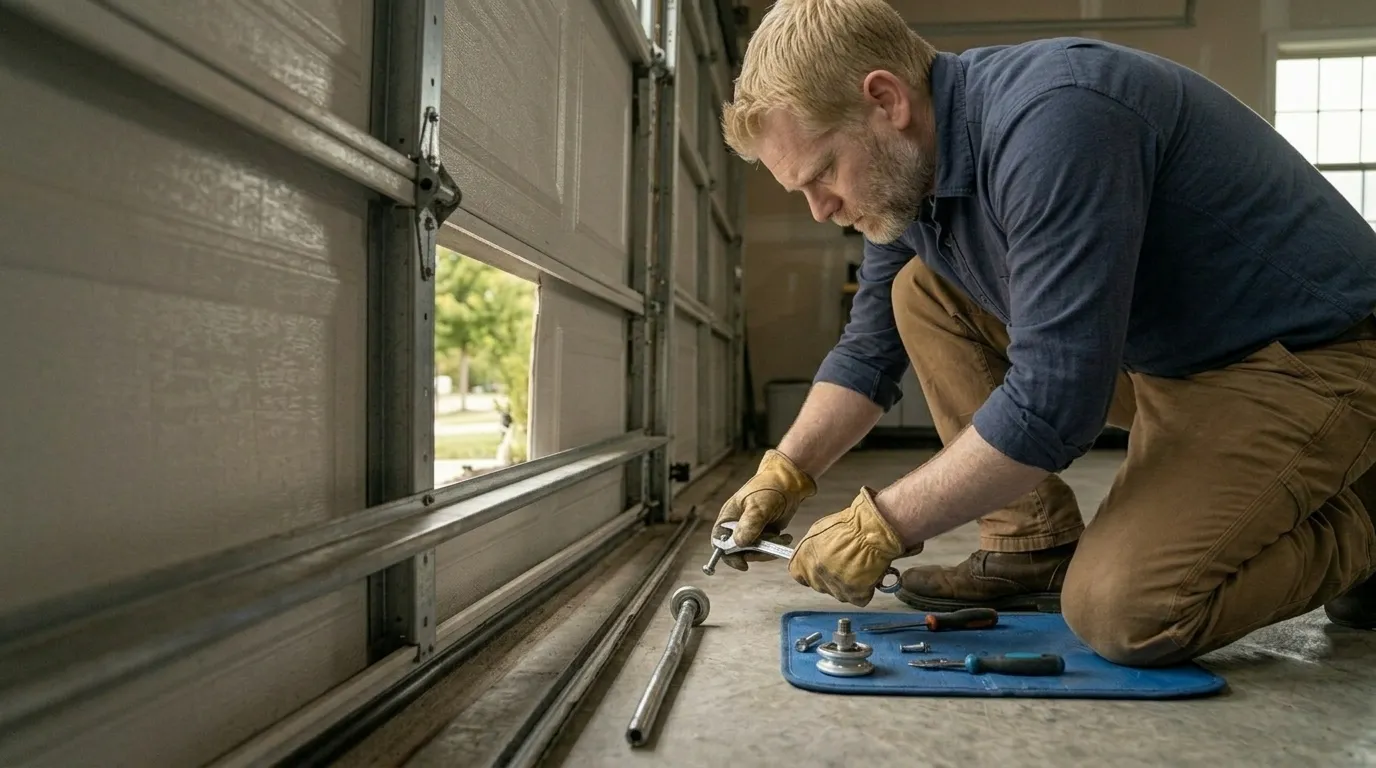
A torsion spring on a door this age usually isn't the original spring - springs wear out on a cycle count, not a calendar, so a door used daily for fifty years has been through several. When we replace one, we match it to the door's actual weight, not just swap in whatever size was there, because a lot of older doors got a heavier insulated replacement panel at some point without anyone re-rating the spring. Rollers and hinges from the 1960s-70s stock are almost always steel, not nylon, and they're loud for a reason - they were built to be cheap and replaceable, not quiet. One limitation worth saying plainly: if the door itself is the original wood or hollow-metal panel from construction, we'll tell you when replacement makes more sense than repair, because parts for some of those older panel styles aren't something we stock and custom-matching isn't worth the cost to you. The mild temperate climate here means we're not fighting frozen tracks or extreme humidity swings, so most of the wear we see is straightforward mechanical fatigue, not weather damage.
South San Jose is about six miles south of downtown, with Almaden roughly eight miles to the southwest and Los Alamitos Creek about five miles south. It's a residential stretch, not a commercial corridor, which is part of why the housing stock reads so consistently - the area filled in during a fairly narrow construction window rather than getting built out piecemeal over multiple decades. We work this part of the service area regularly, and the job mix tends to run toward spring replacement and opener repair on original garage openings rather than new construction work. Median household income across the broader service area sits above $214,000, and it's common for owners here to want a repair done right rather than the cheapest patch, especially on a door that's original to a house they plan to stay in.
A lot of them are, or close to it. Homes here were mostly built between the late 1950s and 1980s, centered around 1972, so it's common to find an original steel door or an early replacement still running on the first torsion spring or a mismatched later one. We check the spring size against the actual door weight before touching anything.
Depends on the unit. Chain-drive openers from this era are simple mechanically, and a worn gear or capacitor is often a straightforward fix. If the circuit board is failing or the unit lacks a modern safety reversal sensor, we'll tell you replacement is the safer call rather than patching an old board.
Not in the way cold or humid regions see. We're not dealing with frozen tracks or rust from moisture swings. Most issues in South San Jose come down to age and cycle count on the springs and rollers, not weather.
Call now or request a free quote - same-day service on most repairs, upfront written pricing.