San Jose, CA · Garage Door Service
Garage door service for Los Alamitos Creek, 5 miles south of San Jose's center, where original 1960s-70s torsion hardware still runs on most homes.
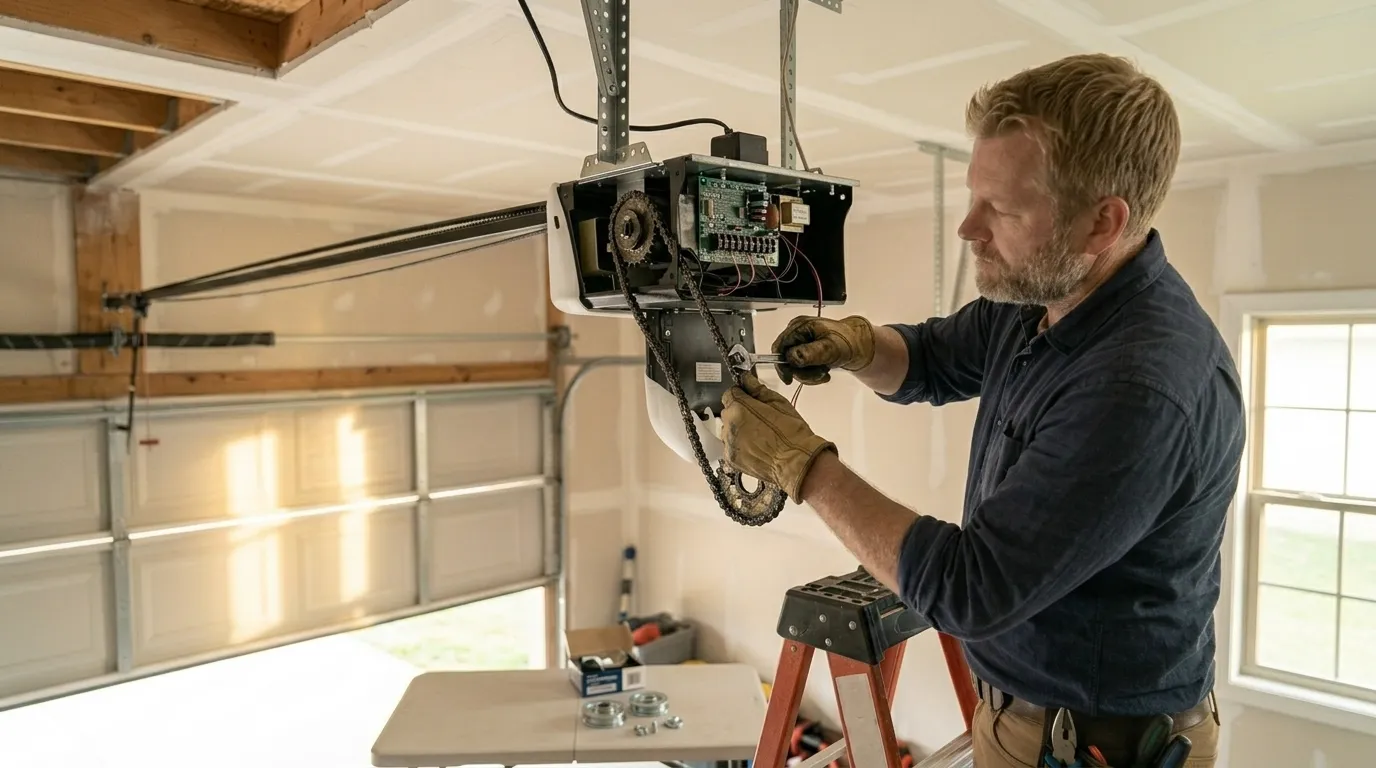
Los Alamitos Creek sits about 5 miles south of downtown San Jose, in a stretch where most of the surrounding housing stock went up between 1957 and 1987, with a lot of it clustering around 1972. That matters more than people think when a door stops working. A house built in that window almost always went in with steel torsion springs sized for the original wood or light steel door, not the heavier insulated panels a lot of owners have swapped in since. When you upgrade the door but keep the old spring and drum setup, the door gets slow, the opener strains, and the cable starts fraying years before it should. We see this pattern across the area's 1960s-70s tract construction constantly: a newer door bolted onto 50-year-old hardware that was never rated for the added weight. The fix isn't always a new door. Sometimes it's re-sizing the spring to match what's actually hanging on the track now. Other times the track itself has enough play in the brackets that no amount of spring adjustment solves the binding. Either way, the age of the house tells you where to start looking before you even open the panel.
If your door is original to a house built in the early 1970s, the torsion spring has outlived its rated cycle count regardless of how it sounds right now - springs don't warn you, they just let go. We'll tell you straight if a repair is worth it or if you're better off replacing the spring and opener together rather than patching one part at a time. One honest limit: we don't stock every gauge of vintage track hardware from that era on the truck, so a job on an unusually old bracket setup can mean a short parts wait rather than a same-visit fix. The mild temperate climate here doesn't put the stress on doors that freeze-thaw regions deal with, so when a door in this neighborhood fails, it's almost always wear and age, not weather damage. That's actually good news - it means most repairs are mechanical and predictable, not the kind of hidden rot or moisture damage you'd chase in a harsher climate.
Los Alamitos Creek is about 5 miles south of central San Jose, closer in than South San Jose (6 miles S) or Almaden (8 miles SSW), and on the same side of the city as Evergreen and Silver Creek Country Club, both roughly 2 miles east of center. The area sits within a service region of 173,742 households, with 69,266 of those owner-occupied houses - the kind of housing base where garage door wear runs consistent across whole blocks built in the same few years. Median household income across the service area runs $214,149, which is worth mentioning only because it tends to track with owners who replace rather than nurse along a door that's on its last spring. We work this side of San Jose regularly, from Los Alamitos Creek out toward the surrounding tract neighborhoods, without needing a landmark to find the block - the housing age alone tells us most of what we need before we get there.
If the house dates to the 1960s or 70s, the original torsion spring was sized for the door that came with the house - often lighter than what's on the track now. As springs fatigue with age, lifting gets harder gradually, so it feels normal until it isn't. A spring resize usually fixes it.
Not always. Bracket wear and bent rail are common on houses from that era, but often the track can be re-aligned rather than replaced. We check for play in the brackets before recommending a swap - replacing a track that's just loose wastes your money.
Less than a region with hard freezes, yes. You're not dealing with ice-cracked panels or swollen wood frames. Most failures here come down to cycle count and age on the spring and hardware, not weather, so maintenance is more about wear checks than weatherproofing.
Call now or request a free quote - same-day service on most repairs, upfront written pricing.