San Jose, CA · Garage Door Service
Installing new garage doors on San Jose's 1960s-80s housing stock, from Evergreen to Almaden. Straight talk on what fits your opening and what doesn't.
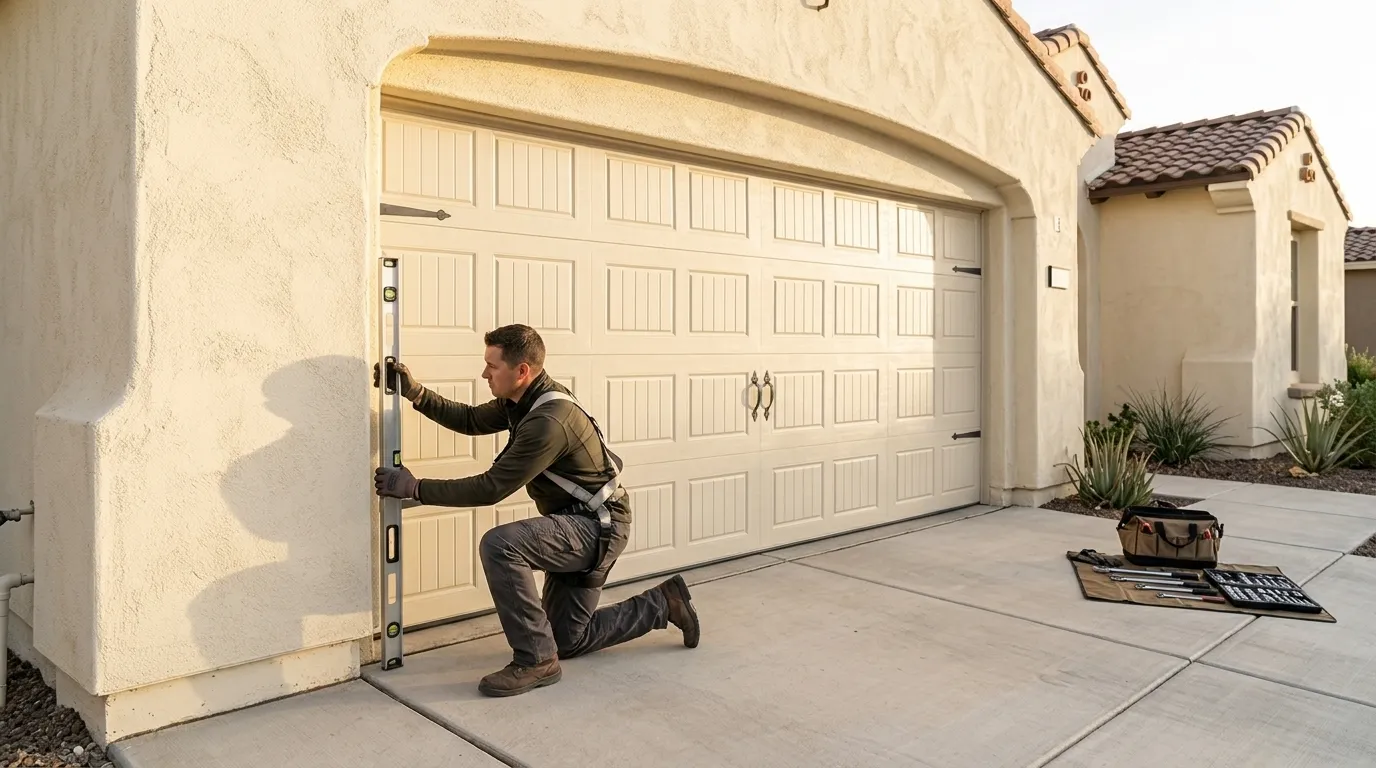
Most calls we get about installation aren't about a door that broke overnight. They're about a door that's been getting worse for years - a panel that's dented past patching, an opener that grinds instead of lifts, or a track that's been re-bent so many times it won't hold alignment anymore. In a lot of San Jose neighborhoods, that door is original to the house or close to it, since the housing stock across this service area mostly went up between 1957 and 1987, with a median build year around 1972. A door from that era was sized and hung for hardware nobody makes the same way now.
Sometimes the sign is simpler: the homeowner wants a new opener with a phone app and finds out the old door's construction won't take a modern opener's lift specs safely, or the track spacing doesn't match anything on the shelf. Either way, by the time someone calls us about installation rather than repair, they've usually already tried the cheaper fix once.
We look at the opening itself before we talk product - width, height, headroom, and what's already bolted to the framing. On a lot of the older builds across the 16 named areas we work in, headroom is tighter than it looks on paper, which limits which track and spring setup will actually fit. We'll tell you that up front rather than after the door shows up on the truck.
We don't quote a firm price over the phone for installation, since the right door and hardware depend on what we find at the opening. What we can do is walk through options on site and give you a number before any work starts, so there's no guessing once the truck is in the driveway.
A proper installation isn't just swapping the panel section for a new one. We pull the old door, check the jambs and header for square, and replace track, rollers, and hardware to match the new door's weight and lift requirements rather than reusing whatever's there. On houses from the 1960s and 70s stock common across this area, the framing was often built to older door weights and thinner insulation standards, so a heavier insulated door sometimes means adjusting the spring system and, occasionally, the header itself.
Here's the honest limit: if the framing around the opening has shifted or rotted, that's carpentry work outside what a door install covers, and we'll say so rather than force a door into an opening that isn't square. We'd rather flag that than have the door bind six months later.
Once the new door is set, we balance the springs to the door's actual weight and test the opener's force settings so it doesn't strain against a door that's heavier or lighter than the last one.
San Jose's climate band is mild temperate - no deep freeze, no heavy snow load - so the failures we see aren't weather-driven the way they might be in a harsher climate. What drives replacement here is age and mismatch: doors and openers built for houses that went up decades ago, paired now with heavier insulated panels or smart openers they were never engineered to carry. Across a service area with roughly 69,266 owner-occupied houses among 173,742 households, a lot of those original doors are simply reaching the end of what steel and springs are rated for.
There's also a mismatch problem with additions and remodels - a garage converted or extended after the original build date often ends up with an opening that's slightly off from standard sizing, which is common in neighborhoods built in stages through the 1970s and 80s. That's usually the point where a repair stops making sense and a full install, sized to the actual opening, is the more sensible call.
If the panels are dented or delaminating, if the door is original to a house built in the 1960s or 70s, or if you're adding a heavier insulated door or new opener, replacement usually makes more sense than patching. We'll tell you honestly on site if a repair would hold up instead.
Not always. Many San Jose homes from this era have openings sized for older hardware, and headroom can be tighter than expected. We check the actual opening before recommending a door, since track and spring setups vary by house.
It depends on the door's construction and weight rating. Some original doors from the 1960s-80s stock aren't built to handle modern opener lift specs safely, so we check that before recommending a new opener paired with an existing door.
Call now or request a free quote - same-day service on most repairs, upfront written pricing.