San Jose, CA · Garage Door Service
Garage door repair for San Jose homes built mostly between 1957 and 1987 - springs, openers, and tracks worn by original hardware and mild coastal swings.
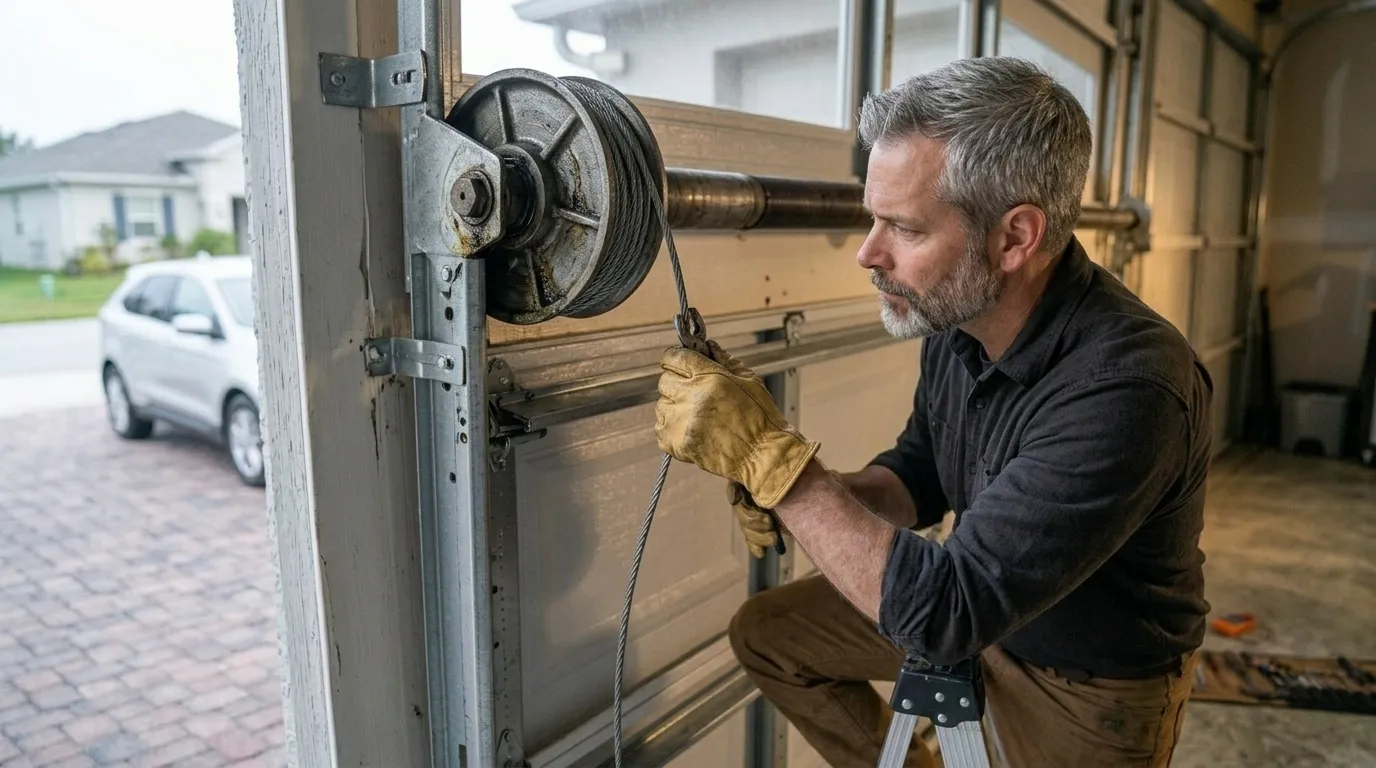
Most calls start the same way: the door stops halfway, reverses on its own, or the opener runs but nothing moves. In San Jose that usually traces back to hardware that's older than it looks. A lot of houses here went up between 1957 and 1987, with the bulk of that stock dating to the 1960s and 70s across the sixteen named areas we work in, from Evergreen and Silver Creek Country Club near the east side to South San Jose and Almaden to the south. Original torsion springs and steel tracks from that era were built for a different door - lighter panels, no insulation, simpler openers - and they're now well past the cycle count they were rated for. You'll also see cables fraying at the drum, rollers cracked at the stem, and center bearings that squeal before they seize. None of that is a mystery once you know the age of the housing stock we're dealing with. A door that's fine one week and locked up the next is usually just the last worn part finally letting go.
Tell us what the door is doing - stuck, noisy, off track, opener not responding - and roughly how old the house or the door is, since that points us to what's likely worn. We ask because a garage installed in 1968 and one installed in 2005 fail differently, even on the same street. Give us the general area, whether that's near Evergreen, off toward Almaden, or up by East Foothills, so we know the drive and can bring the right spring sizes and track hardware for that vintage of door. If the opener is original to a 1970s build, we'll usually bring both a repair kit and a like-for-like replacement option, because sometimes the motor housing itself is the failure point and there's no fixing around that. We don't overbook the day - if a job runs long because a spring is seized or a track is bent worse than it looked from the driveway, the next call moves, not gets rushed.
A torsion spring replacement on a door from the 1960s-70s stock usually means matching wire gauge and coil length to a system that was never labeled clearly to begin with - manufacturers didn't standardize that until later, so we measure rather than guess. Track work on these older doors often means straightening or replacing sections bent by a car bumper decades ago and never touched since, because the door still ran even if it wasn't running straight. On openers, we check the drive gear and capacitor before we touch the logic board - a worn gear on a chain-drive unit from that era mimics a electronics failure almost exactly. One honest limitation: if a door's tracks are rusted through or the panel steel has thinned to the point of denting under normal weight, we'll say so and price a replacement door instead of pouring parts into a frame that won't hold them. Mild coastal temperatures here mean we're rarely fighting frozen grease or ice-jammed rails, so most of what fails is fatigue and age, not weather shock.
San Jose's mild temperate climate is easy on garage doors in the way that matters least - no deep freeze, no ice damming the track - and hard on them in the way that matters most: nothing forces an early replacement, so original 1960s and 70s hardware just keeps running until it doesn't. A door in a harsher climate might get swapped out after storm damage. Here it runs on the same springs and rollers for forty-plus years because nothing ever broke it outright. With 69,266 owner-occupied houses in the service area and a median household income of $214,149, a lot of owners have the means to replace rather than patch, but many simply haven't had a reason to look at the garage door until it stops working. Add in the sun exposure typical of this stretch of the valley, which dries out lubricant and hardens rubber weatherstripping faster than cold-climate compounds, and you get the pattern we see daily: mechanical parts that are original to the house, finally worn through.
Because so much of the housing here dates to 1957-1987, with the bulk from the 1960s and 70s, a huge share of doors are still running original torsion springs. Those springs have a rated cycle life, and after four or five decades of daily use, they're simply due, not necessarily damaged by any one event.
Less than you'd think for cold or ice, since the climate here is mild temperate. What it does affect is wear from heat and sun exposure, which dries lubricant and hardens weatherstripping over time - slower failures than a freeze-thaw climate sees, but they still add up.
Depends on the frame and panels, not just the moving parts. If the track is rusted through or the steel has thinned enough to dent under normal weight, we'll tell you plainly that replacement makes more sense than another repair - patching a door that's structurally done just costs you twice.
Yes, those are both part of the areas we cover, along with South San Jose, Silver Creek Country Club, and the rest of the service area. Let us know your general area when you call so we bring the right hardware for that part of town.
Call now or request a free quote - same-day service on most repairs, upfront written pricing.