San Jose, CA · Garage Door Service
Springs, openers, and tracks fail differently in San Jose's 1960s-70s housing stock. San Jose Garage Door Pros diagnoses and fixes the actual cause, not just the symptom.
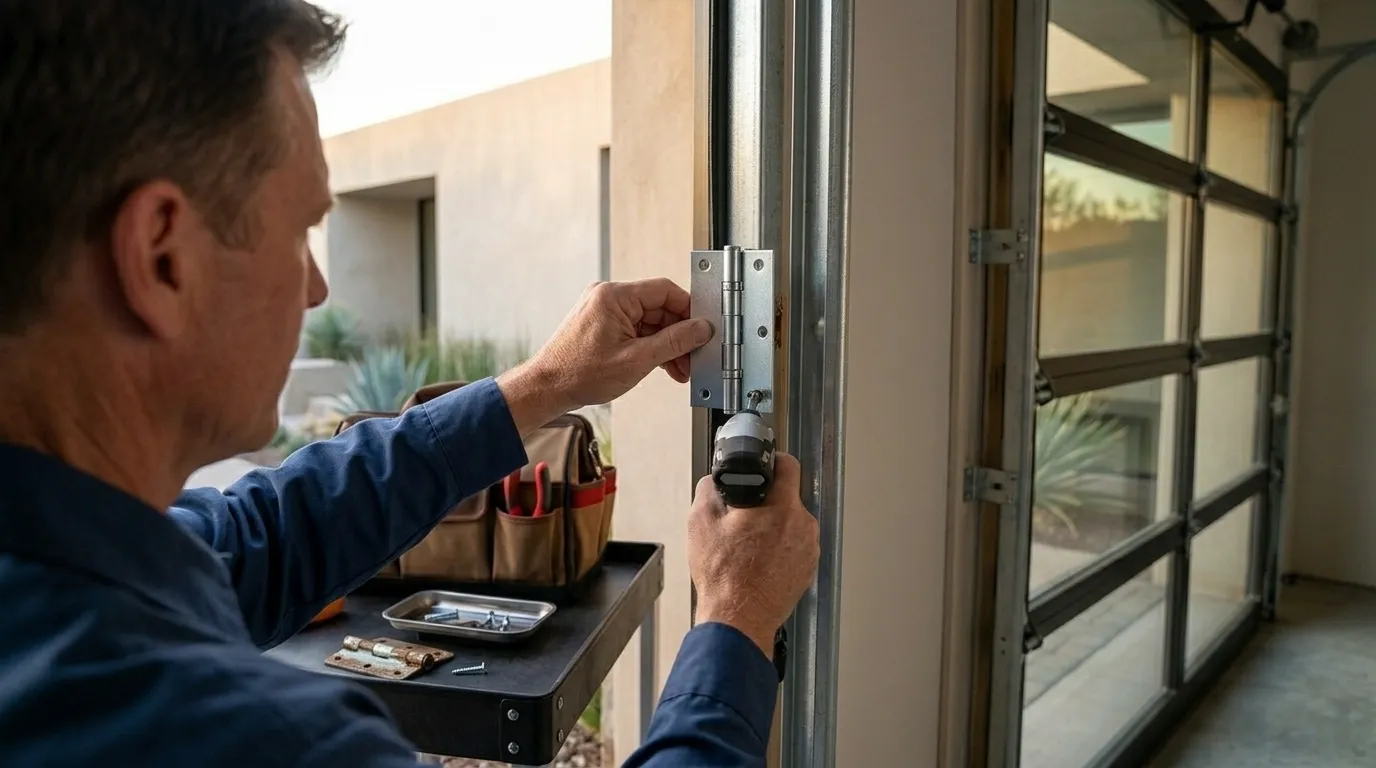
Most calls start the same way: the door hesitates halfway up, or it slams the last foot on the way down instead of settling. Sometimes it's a grinding sound from the tracks, sometimes the opener runs but the door doesn't move at all. In San Jose, a lot of this traces back to hardware that's older than the current owner realizes. Houses across this area were mostly built between 1957 and 1987, with a median build year around 1972, and the 16 named neighborhoods we work in are heavy on that same 1960s-70s stock. A door that's original, or close to it, on a house from that era is running on torsion springs and track brackets that were never designed for 50-plus years of daily cycling. The mild temperate climate here means the metal isn't fighting rust the way it would somewhere with real humidity or freeze-thaw cycles, so a lot of these parts look fine and still fail from plain fatigue. The symptom people notice - the noise, the jump, the door that won't seat right - is rarely the actual problem. It's the last visible sign of a spring or bracket that's been wearing out quietly for years.
When you call, tell us what the door is doing and roughly how old the house is - not the exact year, just whether it's original construction or already been through a remodel. That one detail changes what we bring on the truck. A door from the 1960s-70s stock common across this area usually still has its original torsion hardware, sometimes a single spring on a double door, which isn't something every supplier stocks off the shelf. We'd rather confirm what we're dealing with before we're standing in your driveway than guess and have to make a second trip. We work across San Jose and the surrounding areas, including places like East Foothills, Evergreen, and Almaden. If you're not sure whether your address falls inside the area we cover, ask when you call - we'll tell you straight rather than send someone out for a job we can't finish.
Once we're on site, the first job is figuring out whether we're looking at a spring problem, a track problem, or an opener problem, because they get misdiagnosed as each other constantly. A worn torsion spring makes the opener strain and can look like a motor failure. A track that's shifted out of alignment - common on older houses where the framing has settled over decades - can make a perfectly good opener seem weak. We check spring tension, roller condition, cable wear, and track alignment before we touch the opener itself. On original hardware from the 1957-1987 building era, the honest limitation is that some parts simply aren't made anymore, and matching an odd-sized original torsion spring can take a special order rather than a same-day swap. When that happens, we'll tell you the wait time up front rather than push a mismatched part into place. For most 1960s-70s doors, though, a spring replacement and track adjustment gets the whole system running the way it did when the house was new.
The mild temperate climate in San Jose is actually kind to garage door hardware compared to most of the country - no deep freezes to crack seals, no heavy humidity to rust cables through. That's the good news. The catch is that mild weather means springs and rollers rarely fail from weather damage; they fail from age and cycle count, and a huge share of the housing stock here gives them plenty of both. With a median build year around 1972 and most of the area's 16 neighborhoods still holding that 1960s-70s stock, a door that's never been serviced has usually seen forty-plus years of daily openings on the original spring. Nothing dramatic breaks it - it just gets weaker cycle by cycle until one day it doesn't have enough tension left to lift the door smoothly. That's why the fix is rarely cosmetic. It's replacing a part that's simply reached the end of a very long working life.
Torsion springs are rated for a set number of open-close cycles, not for calendar years. A door on a house built in the 1960s or 70s has usually gone through tens of thousands of cycles on its original spring. San Jose's mild climate doesn't stress the metal early through rust or freeze damage, so it tends to fail from plain fatigue instead - later, but eventually.
We carry common spring sizes and track hardware on the truck, but some original 1957-1987 era torsion springs are odd sizes that need a special order. If your door needs one of those, we'll tell you the wait before we start the job, not after.
If the opener motor runs but strains, chain-reverses, or the door only lifts partway before struggling, that's usually a spring that's lost tension, not a motor problem. We check spring tension first on every service call before touching the opener.
Call now or request a free quote - same-day service on most repairs, upfront written pricing.