San Jose, CA · Garage Door Service
A look at why San Jose's 1957-1987 housing stock and power cuts mean older garage door openers here fail differently than you'd expect, and what to check first.
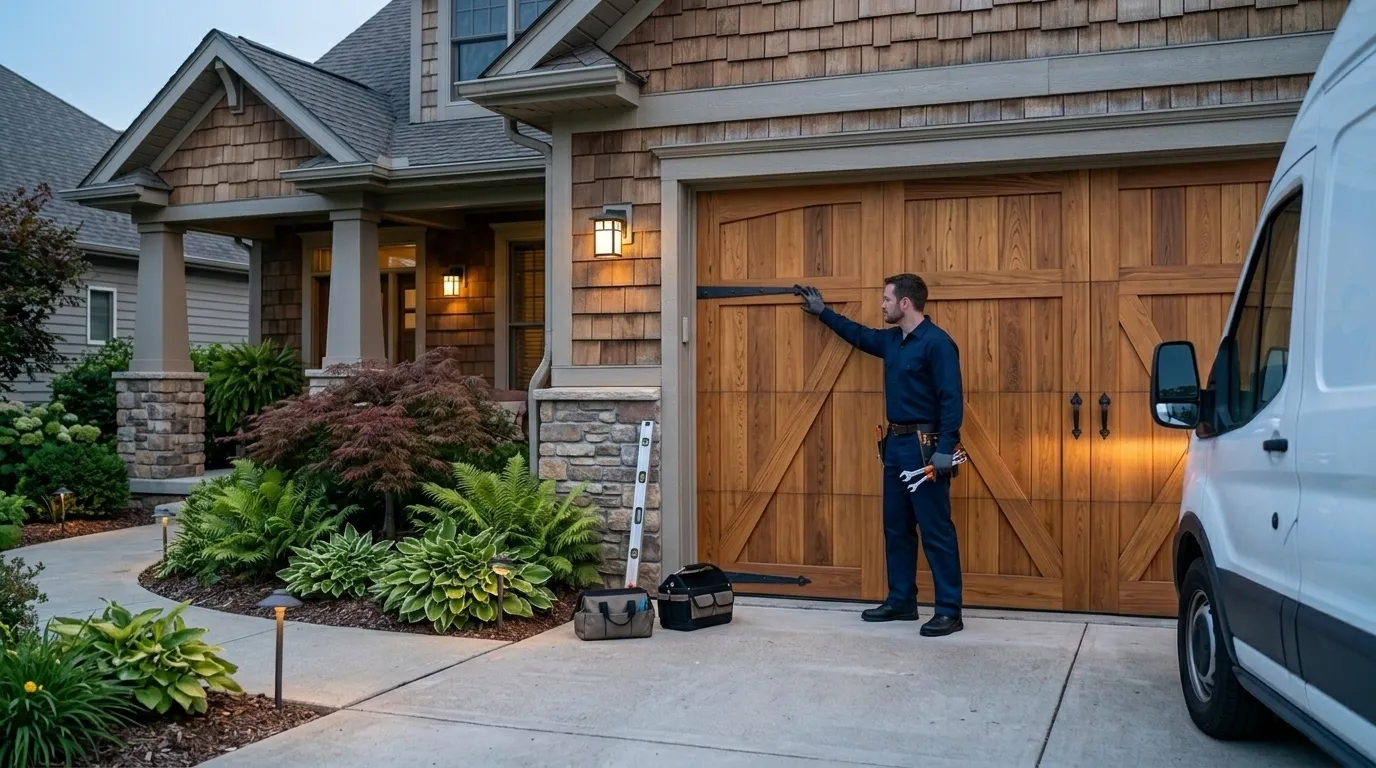
We can't quote a number here without knowing what's actually wrong with your opener, so we won't pretend otherwise. What we can tell you is what drives the range: whether the opener itself is original to the house, whether the wiring is the same run the builder put in decades ago, and whether you're replacing a motor or just a logic board. A lot of San Jose houses were built between 1957 and 1987, and a chain-drive opener from that era doesn't share parts with what's sold today. That means a repair on an original unit sometimes costs more in labor to track down a compatible part than it would to swap in a new opener outright. If your opener predates battery backup as a standard feature, that's worth asking about before you decide repair versus replace, since a power cut with no backup means you're stuck outside regardless of what else is wrong.
One honest limitation: we don't stock every legacy part for openers from the 1960s and 70s. If yours is that old and the part isn't common, we'll tell you straight rather than have you wait weeks on a special order.
"Openers and power cuts" sounds like two separate problems, but in a lot of San Jose homes they're the same call. Across the 16 named areas that make up this stretch of the city, from Almaden to the East Side to Evergreen, the housing stock is overwhelmingly 1960s and 70s construction, with a median build year around 1972. Most of the country got battery-backup garage door openers as a default only in the last fifteen or so years. Do the math on a house built in 1972, and the odds are good the opener has been replaced at least once, but the backup battery habit didn't come with it unless someone specifically asked for it.
So when the power drops, a lot of these openers just stop, full stop, no fallback, and the owner is standing in the driveway with a door that won't budge either way by hand until they find the manual release cord. That cord exists on every one of these units. Most owners have never pulled it.
With 69,266 owner-occupied houses across the service area, a meaningful share of them are still running the original wiring straight from the era of construction, not just the original opener. That combination - old wiring, no backup, chain drive - is the actual story behind most "my opener died in the power cut" calls we get.
San Jose sits in a mild temperate climate band, which means your torsion spring and track hardware aren't fighting the freeze-thaw cycle that chews through steel in colder cities. That's the good news, and it's real: you're not going to see the kind of cold-snap spring failures that show up in places with hard winters. The metal doesn't contract and expand the same way.
What mild weather doesn't fix is age. A track or spring installed when the house was built in the 1957-1987 window is old regardless of what the climate did to it, and lack of weather stress just means the failure, when it comes, tends to be gradual wear rather than a sudden crack from cold. That's worth knowing because it changes what you're watching for: not ice-related binding, but slow roller wear and a spring that's simply worn out its cycle count.
Power cuts, for their part, aren't a weather story here so much as an electrical one - an opener with no battery backup goes dark the moment the grid does, mild climate or not. We don't have data tying local outages to any specific cause, so we won't guess at one. What we can say is that the fix for the power-cut half of the problem has nothing to do with San Jose's weather and everything to do with whether your opener has backup power at all.
Start with the manual release. Every opener from every era has one - a cord hanging near the motor unit - and if you've never pulled it, do it now, in daylight, before you need it in the dark during an outage. Know where it is and how it resets.
Next, check the opener's age against the house. If your San Jose house dates to the 1957-1987 window and nobody's mentioned replacing the opener, assume it's original or close to it, and assume it has no battery backup. That's the single biggest factor in whether a power cut leaves you locked out.
Look at the wall wiring too, not just the unit. Houses from this era sometimes still run the original low-voltage wiring to the wall control, and that wiring degrades even when the opener motor itself still works fine.
Finally, whether you're near Evergreen two miles east or Almaden eight miles southwest, the same pre-1988 wiring pattern shows up house after house across this service area - so don't assume your situation is unusual just because a neighbor's opener seems newer. It might just be a later replacement on the same old house.
Most openers built without battery backup have no way to move the door once the power feed drops. A lot of San Jose houses, especially ones built in the 1957-1987 range, got their openers before backup batteries were standard, so this is common rather than a sign something else is broken.
Not in the way cold climates do. San Jose's mild temperate climate means you're not dealing with the freeze-thaw stress that cracks springs and stiffens tracks elsewhere. Failures here tend to come from age and wear rather than weather, which fits the age of a lot of the local housing stock.
Look for a cord hanging from the trolley on the track near the motor unit, usually with a red handle. Pulling it disconnects the door from the opener so you can lift it by hand. Every opener has one regardless of age; it's worth locating it before you actually need it.
If your opener is original to a house built decades ago, it likely doesn't have backup power, and retrofitting isn't always possible depending on the model. In many cases it makes more sense to replace the whole unit with one built for it than to try to add backup to an old chain-drive opener.
Call now or request a free quote - same-day service on most repairs, upfront written pricing.