San Jose, CA · Garage Door Service
Palo Alto homes mostly date to 1963, a decade before the wider San Jose service area's 1972 median. That gap matters for spring sizing and opener retrofits. We drive out from San Jose.
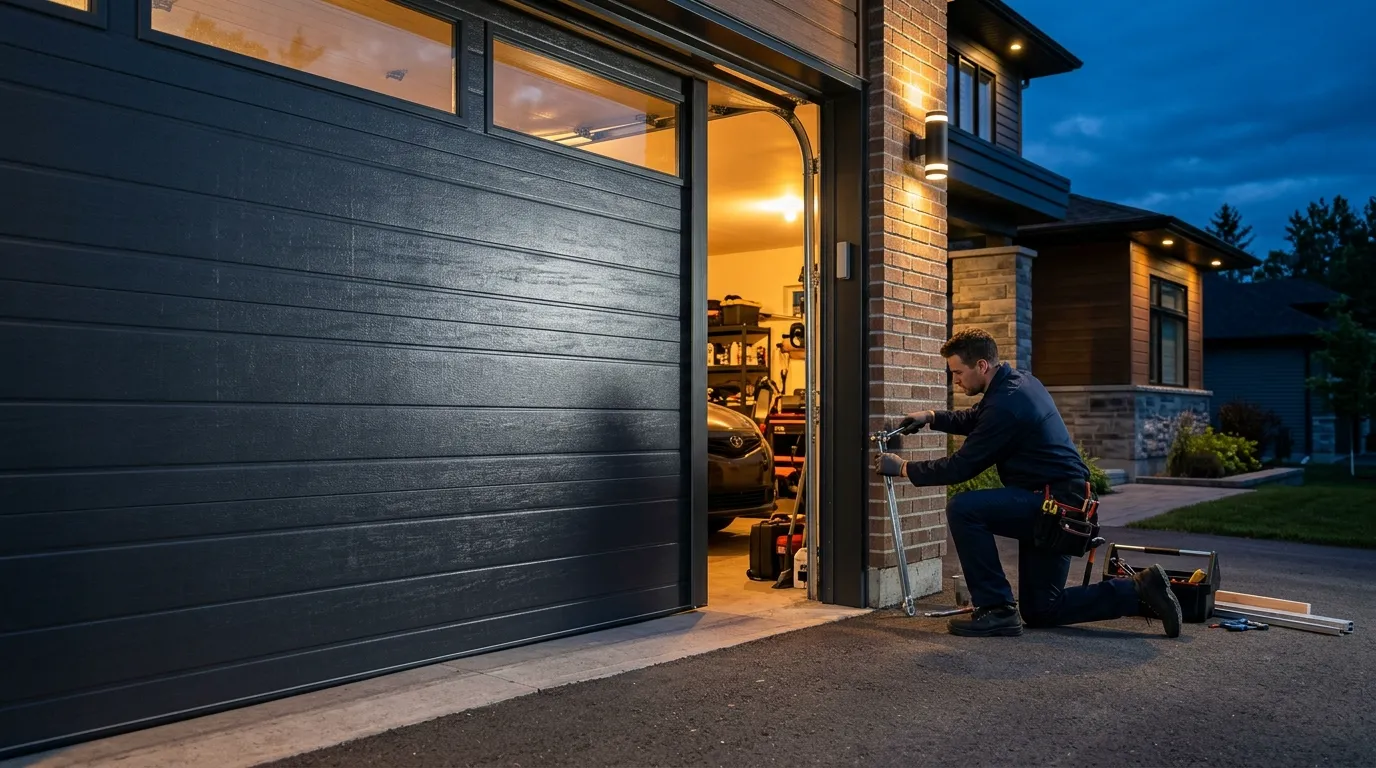
We're based in San Jose, about 19 miles from Palo Alto, and we run trucks out this way as part of our regular coverage. We don't keep a depot here, so we won't tell you we can be at your curb in fifteen minutes - that's not honest and we're not going to promise it. What we will say is that Palo Alto is a normal stop on our route, not a special trip, and the drive time is baked into how we schedule the day.
Because the trip out takes real time, we try to bundle diagnosis and repair into one visit rather than sending someone to look and someone else to fix. If your spring lets go on a Tuesday morning, tell us that up front - a snapped torsion spring on a double door is not something to leave for later, since the opener will keep trying to lift a door it physically can't move and burn itself out doing it.
The honest limitation: if a part needs to be special-ordered - an odd-width track or a discontinued opener board - that adds days regardless of how close we are. Distance affects when we can look at it. Parts availability affects when we can finish it. Those are two different clocks and we won't pretend they're the same one.
Palo Alto's housing stock centers on 1963, noticeably older than the 1972 median across the wider San Jose service area. That ten-year gap is the whole story here. A house built in the early 1960s was framed before steel sectional doors were the default choice, and a lot of those original garage openings still carry hardware sized for heavier wood doors or early steel replacements - different track radius, different spring wind, sometimes a jamb bracket pattern that doesn't match what comes in a modern install kit.
What we see most in this pocket: torsion springs that were upsized decades ago for a heavier door and never recalculated when the door itself was swapped, and openers bolted to framing that predates the load ratings modern openers assume. Neither is dangerous on its own, but they're the kind of thing that turns a simple opener swap into an afternoon of re-bracing if nobody catches it first.
The climate here doesn't demand anything unusual - it's the same mild temperate band as the rest of the region, so we're not fighting freeze-thaw cycles or extreme humidity swings on hardware. The wear you see on a 1963 door is age and unmatched hardware, not weather.
Palo Alto counts roughly 26,054 households, with a median household income around $220,408 - noticeably higher than the roughly $214,149 median across the broader 173,742-household service area. That income difference shows up in the calls we get: more requests for insulated doors, quieter belt-drive openers, and full replacements rather than patch repairs when a door is past its useful life.
It sits close to several of the area's higher-end pockets - Los Altos and Los Altos Hills roughly 16 to 18 miles out, Menlo-adjacent stretches near Mountain View at 16 miles - and the housing pattern tracks with that: larger lots, more custom garage widths, and doors that were sometimes built or modified to match a specific opening rather than off a standard size chart. That's worth knowing before you call around for a replacement quote, since a non-standard width can change both the price and the lead time on the door itself.
We don't have block-by-block data on which streets lean older or newer within Palo Alto, so we won't guess at your specific house - what we can tell you is the citywide median, and that a 1963-era home is old enough that original hardware is a fair question to ask about before any repair.
We come out to Palo Alto from San Jose, about 19 miles each way, and it's part of our normal service area rather than an edge case. Along the route we also cover several nearby communities - East Foothills, Los Gatos, Monte Sereno, Milpitas, Saratoga, and points further out like Cupertino and Mountain View - so a Palo Alto call often fits naturally alongside other stops the same day.
We're not going to claim a local yard or a Palo Alto address, because we don't have one - the honest answer is that every job here starts with a drive from San Jose. That's the same for the surrounding towns at similar distances, like Los Altos or Newark. What it means practically is that scheduling a same-day visit works best when you call early, since the truck's route for the day is usually set by mid-morning.
If you're comparing us to someone who does keep a location closer to you, that's a fair thing to weigh. What we bring instead is a team that sees this same 1960s-era hardware across a wide stretch of the South Bay, so the springs, tracks, and opener quirks common to houses built around 1963 aren't a guessing game when we get there.
No. We're based in San Jose and drive out, about 19 miles each way. Palo Alto is part of our regular coverage area, not a special trip, but we won't claim a local depot we don't have.
Palo Alto's housing stock centers on 1963, about a decade older than the wider service area's 1972 median. Homes from that era often have original torsion spring sizing or bracket patterns that don't match modern standard kits, which can complicate an opener swap or spring replacement.
No. It falls in the same mild temperate band as the rest of the service area, so there's no freeze-thaw or extreme humidity to account for. Wear on older doors here tends to come from age and mismatched hardware, not weather.
Some Palo Alto homes, especially near the larger-lot areas toward Los Altos and Los Altos Hills, have garage openings that were custom-sized rather than built to a standard chart. We can quote those, but non-standard widths usually mean a longer order lead time than an off-the-shelf door.
Call now or request a free quote - same-day service on most repairs, upfront written pricing.