San Jose, CA · Garage Door Service
Lexington Hills homes date to 1958, a decade before most of San Jose's stock. We bring the right torsion hardware for older doors on the 14-mile run out from San Jose.
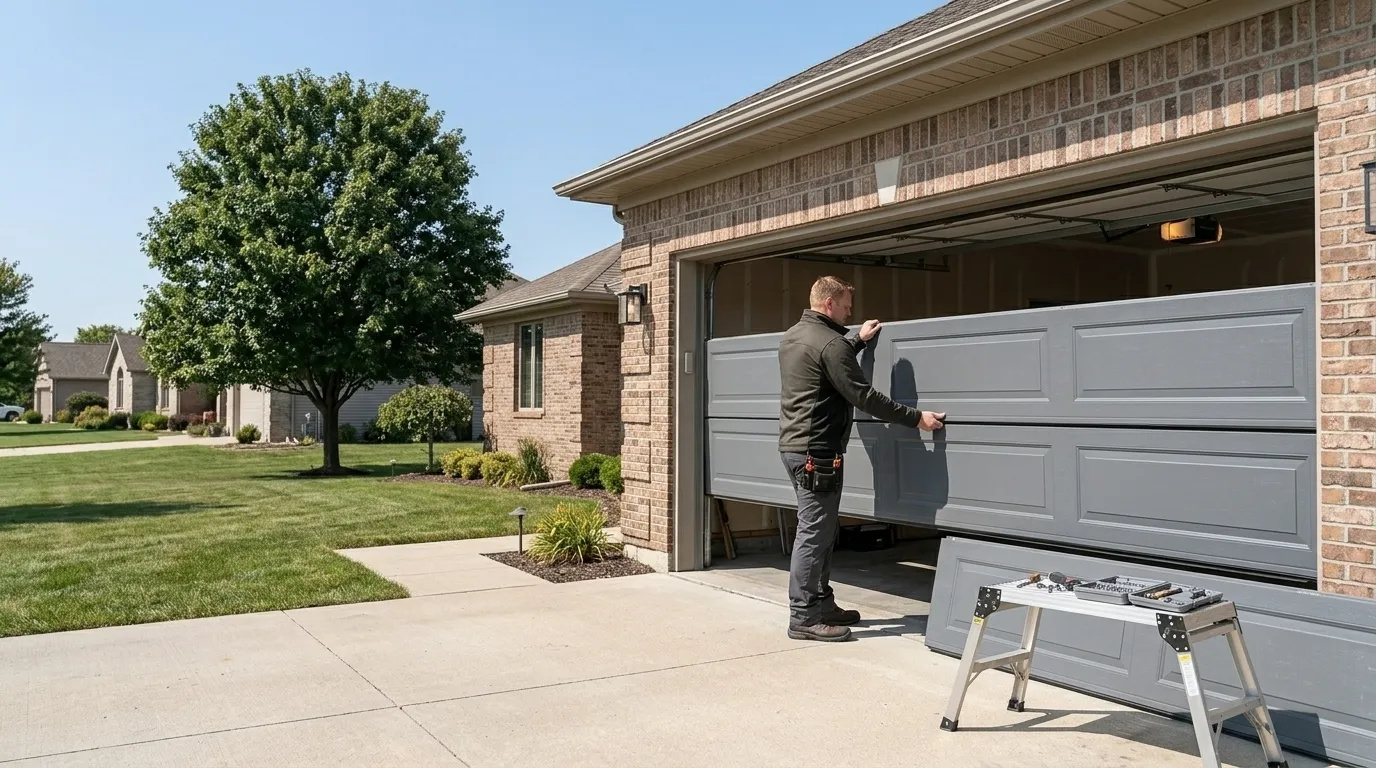
We run trucks out to Lexington Hills from San Jose, about 14 miles down toward the hills past Almaden and Los Gatos. Because this is a drive-out area rather than a depot town, we ask a few more questions on the phone before we load the truck - what year the door went in, whether it's ever been replaced, and what's actually failing. That lets us bring the right torsion springs and hardware on the first trip instead of a second one. We don't have a posted response window for this area and won't pretend to; call and we'll tell you what the day looks like once we know the job.
What we can tell you is that jobs out here tend to run longer than a same-block San Jose call, simply because of the drive and because parts for older doors aren't always the ones sitting in the truck bin. If your spring let go on a Friday afternoon, say so - we'll tell you honestly whether we can make it same day or whether it's a next-morning job.
Lexington Hills homes have a median build year of 1958, a full fourteen years ahead of the 1972 median for the wider San Jose service area. That gap matters more than it sounds. Doors and openers installed in the late 1950s and early 1960s were built for hardware nobody stocks new anymore - narrower track gauge, side-mounted torsion springs on some models, and single-layer wood or early steel panels that weigh more than what goes in today. When one of these doors fails, it's rarely a simple parts swap; the bracket spacing or drum size often doesn't match a modern kit off the shelf.
We see this pattern often enough in the older pockets of the service area to plan for it: bring adapter hardware, expect to cut a new spring to length on site, and budget extra time for panel doors that were never meant to pair with a modern opener. If a house here still has its original door, replacement usually costs less over time than chasing parts for something built before most current opener models existed. That's not a sales pitch - it's what the math on these older units tends to show.
Lexington Hills is a small area - about 972 households - which keeps it out of the volume any company can promise fast turnaround for. It also runs well above the wider service area's median household income, at roughly $245,000 versus $214,149 across the 173,742 households San Jose Garage Door Pros' service area covers. That income gap tends to show up in the calls: owners here are more likely to ask for a full torsion conversion or an insulated replacement door rather than a patch repair, and more likely to already know what they want before we arrive.
The area sits in the same mild temperate climate band as the rest of the region, so we're not dealing with the freeze-thaw cycling that cracks seals or seizes torsion springs in colder states. Wear here comes from age and use, not weather extremes - which is part of why original 1958-era hardware can still be running, just barely, decades past when it should have been swapped.
We come out of San Jose, roughly 14 miles down through the foothills past Almaden and Los Gatos to reach Lexington Hills. It's a real drive, not a quick hop across town, and we build that into how we schedule the day rather than pretending otherwise. Because we're not based here, we batch calls in this area where we can, so if you're not in a rush, telling us that helps us get you a technician who's already headed this direction.
If you are in a rush - a spring that's snapped and a car trapped inside - say so up front. We'll tell you straight whether the truck can turn around and get to you today or whether the earliest slot is tomorrow morning. We'd rather give you an honest number than a promise we invented to get off the phone.
Houses in Lexington Hills mostly went up around 1958, well before the 1972 median for the wider San Jose area. Doors from that era often used narrower track and different torsion or side-mounted spring setups than what's sold new today, so a modern spring kit sometimes needs an adapter bracket rather than a straight swap.
No. We're based in San Jose and drive out, about 14 miles each way. That means we plan the visit around the drive and the parts we expect to need, rather than promising a same-hour arrival the way a local depot might.
Sometimes, but not always. If the panel or track hardware is original and no longer matches current parts, chasing repairs can cost more over a few years than replacing the door outright. We'll look at what's actually failing before recommending either path.
Call now or request a free quote - same-day service on most repairs, upfront written pricing.