San Jose, CA · Garage Door Service
Los Altos homes built around 1964 often still run original opener hardware. We install modern openers matched to older track and door weight, traveling from San Jose.
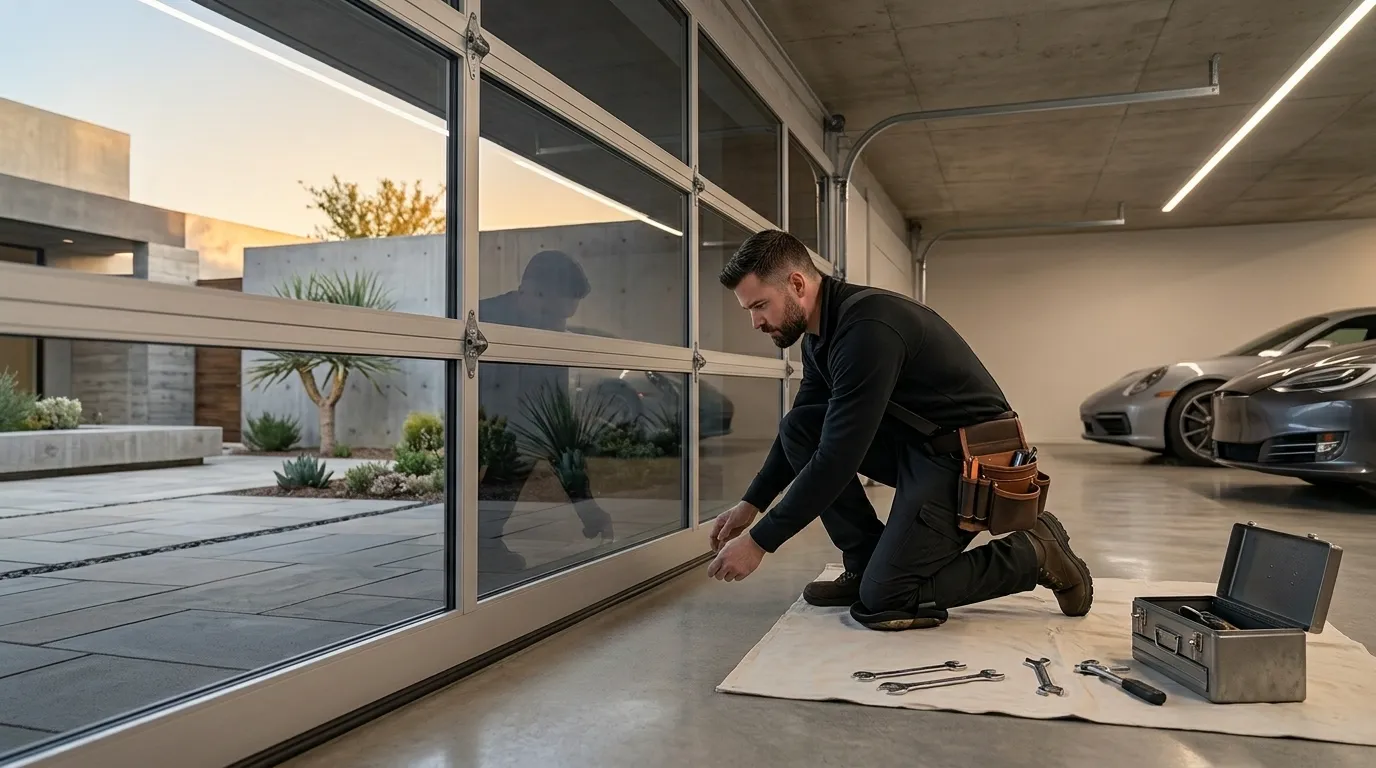
We don't keep a truck parked in Cupertino. We run out of San Jose, about 13 miles away, so when you call we're giving you a real answer based on that drive, not a promise that we're already around the corner. That's the honest version of it: the job gets scheduled, the truck comes from San Jose, and the distance is part of the math.
What that means for you: if a spring lets go on a Tuesday morning, we're not going to pretend there's a local depot we're rolling out of. We're planning the drive same as any other call in this part of the service area. Where it helps is that Cupertino sits close to several other stops we already make regularly - Saratoga, Los Altos, the Cupertino side of Los Altos Hills - so a call here often lines up with a run we're already making that day rather than a special trip on its own.
The typical house in this part of Cupertino went up around 1973. That's a specific window, and it matters because garage door hardware changed fast through the 1970s. Homes from right around that year are the ones most likely to still have an original extension-spring setup mounted along the horizontal track, rather than the torsion spring over the header that became standard as the decade went on. Extension springs from that era don't have the safety cables that later code required, and parts for the original openers, if they're still in place, are long out of production.
We're not going to tell you every door from 1973 needs replacing - plenty of them have been reworked over the years with newer torsion hardware and a modern opener bolted on. But if your panel, track, and springs all look original, that's the tell. The honest limitation here: if what's failing is a proprietary opener drive from that period, we may not be able to source an exact replacement part, and the straighter path is swapping the opener rather than chasing obsolete pieces.
Cupertino counts about 21,137 households, a small slice of the roughly 173,742 across the full service area we cover out of San Jose. Median household income here runs $231,139, noticeably above the $214,149 median for the wider area - which shows up in the kind of door work we get called for. More owners here are asking about insulated steel or wood-composite panels and quieter belt-drive openers rather than the base steel section and chain-drive combination that's more common elsewhere in the coverage area.
The climate doesn't force any special hardware - this whole region sits in a mild temperate band, so we're not dealing with the freeze-thaw cycling that cracks panels or seizes rollers in colder climates. What ages a door here is mostly just time: forty-plus years of daily cycles on the same torsion spring, tracks that have gone slightly out of alignment, weatherstripping that's hardened and cracked. None of that is dramatic. It's just what happens to hardware that's been doing its job quietly since the early '70s.
The run from San Jose to Cupertino is about 13 miles, and it's one we make often - Cupertino sits in the middle of a cluster of stops we cover regularly, with Saratoga about 12 miles out and Los Altos around 16. That's useful in practice: a spring repair booked for Cupertino frequently shares a route with a call in one of those nearby areas, which keeps scheduling realistic instead of guesswork.
We don't route through areas outside our regular coverage to get here, and we're not going to claim a shortcut that doesn't exist. It's a straightforward drive down from San Jose, same as for the other communities on the west side of our service area. If you're near the edge of Cupertino and closer to Saratoga or the Los Altos Hills side, mention that when you call - it can affect which part of the day works best for scheduling.
No. We operate out of San Jose and travel to Cupertino for every job, about 13 miles each way. We're upfront about that distance rather than implying a local depot that doesn't exist.
Possibly. Homes from around 1973 often started with extension springs and openers without today's safety features. If your panel and track look original, it's worth having the spring type and opener checked, since parts for that generation are often discontinued.
Not particularly. This area sits in a mild temperate climate band, so we don't see the freeze-thaw damage that cracks panels or seizes hardware in colder regions. Wear here comes mostly from age and daily use rather than weather extremes.
Sometimes, but not always. Panel styles from that era are frequently discontinued, so matching depends on what's still available. In many cases replacing the full door ends up being more practical than hunting for one matching section.
Call now or request a free quote - same-day service on most repairs, upfront written pricing.
Most houses in Los Altos went up around 1964, which puts a lot of the original garage hardware well past its expected life even if nobody's touched it. If the opener has never been swapped, it's likely a chain-drive unit from decades ago, bolted to a header that was framed for a lighter door than what's probably hanging there now after a panel replacement or two. Installing a new opener here isn't just unbolting the old motor and hanging a new one. We check the header framing can take the mounting load, confirm the door's actual weight against the new unit's lift rating, and look at the track and rollers the opener will be pulling against. On a house this age, the rail brackets and the jamb hardware are often original too, and they don't always line up with what a current opener kit expects. We adjust travel limits, force settings, and safety reversal to match the door as it sits now, not as it was specified when the house was built. That's the job: matching new equipment to old bones, not just plugging something in.
The area sits about 16 miles from our San Jose base, so we schedule the visit as a full job rather than a quick stop-by.
We stock the belt-drive and chain-drive openers that cover most of what shows up on 1960s Los Altos doors, along with the wall consoles, safety sensors, and drive rail lengths that pair with them. Battery backup units come up more often here than you'd think, since a lot of these homes rely on a single-car or narrow two-car door with no manual release that's easy to reach in the dark. We carry standard bracket kits for header mounting, but if the framing is nonstandard for the house's era, we may need to order a specific plate or a longer rail, which can push the job out a day or two. We don't carry every off-brand remote or every legacy logic board for openers that are truly ancient - if your unit is old enough that the manufacturer no longer makes parts for it, replacement is usually the honest answer rather than a repair.
Climate here is mild year-round, so we're not building in the extra weatherproofing or insulation some regions need on the opener housing itself - that keeps the parts list simpler and the job more predictable.
The most common surprise on a Los Altos install is the header. Houses from 1964 were framed for the door and opener combinations available then, and if a heavier insulated door went in at some point without anyone reinforcing the header, the new opener can pull loose screws or crack old wood within a year. We catch this before the unit goes up, but it sometimes means an extra hour of framing work that wasn't on the original quote.
The second spot is wiring. Older homes in this area sometimes have a single outlet near the garage ceiling wired for a light, not a motor, and it's shared with another circuit. A new opener with a smart controller draws differently than the original unit did. We test the circuit before we commit to the install, and if it needs an electrician, we say so rather than jury-rig it.
Mounting a new opener bracket kit isn't complicated in itself, and plenty of people manage it fine on a newer door with known specs. The part that gets Los Altos homeowners in trouble is the age mismatch: guessing at a header's condition, or assuming the existing track and springs are rated for whatever opener came home from the store. Get the door weight and header condition wrong and the opener either won't lift the door reliably or it strains itself against a track that's fighting it. We're comfortable with someone else handling the console wiring or the smart-hub setup - that part's low risk. The lift mechanics and the header check are where we'd rather look at it in person before you commit to a specific unit.
The usual signal in this area is a door that used to close on the first try and now needs two or three attempts, or a remote that works from the driveway but not from the street. On original 1964-era hardware, that's often the opener's motor capacitor or logic board wearing out, not the door itself. Household incomes in the broader San Jose service area run a median around $214,149, and Los Altos runs well above that at roughly $250,001 - which tends to mean owners here replace an aging opener proactively rather than run it until it fails outright, especially once a Wi-Fi-enabled model becomes the obvious upgrade. Either way, if the door is heavier or newer than the opener was ever built to lift, that mismatch tends to announce itself as noise and hesitation before it becomes a dead motor.
It's possible but not guaranteed. Chain-drive openers from that era typically last 15 to 20 years with normal use, so most 1960s Los Altos homes have had at least one replacement. If yours is still the original unit, it's well past typical service life and worth a look before it fails during a lift cycle.
We stock current belt-drive and chain-drive units and their standard hardware. For openers old enough that the manufacturer has discontinued parts, we'll tell you honestly that replacement makes more sense than trying to source obsolete components.
Los Altos is about 16 miles from our San Jose base. We schedule opener installs as a full appointment rather than a quick add-on, since header and wiring checks on older homes take real time.
Not automatically. We check the door's actual weight and the condition of the track and springs against the new opener's lift rating before installing anything. Mismatches here are the most common issue we run into on houses from this era.