San Jose, CA · Garage Door Service
Los Altos homes date to 1964 on average, older than the wider San Jose service area. That means different springs, different hinges, and a different maintenance call.
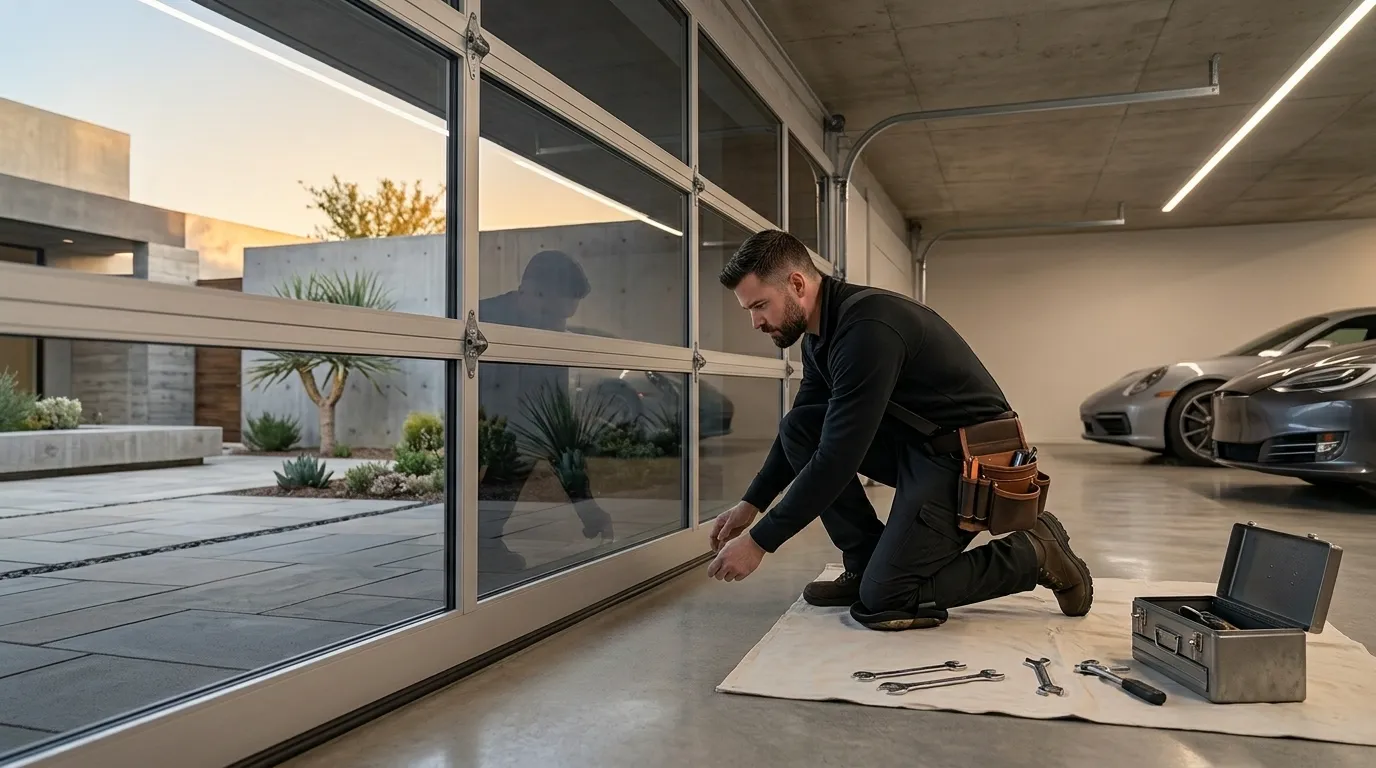
We don't keep a truck parked in Cupertino. We run out of San Jose, about 13 miles away, so when you call we're giving you a real answer based on that drive, not a promise that we're already around the corner. That's the honest version of it: the job gets scheduled, the truck comes from San Jose, and the distance is part of the math.
What that means for you: if a spring lets go on a Tuesday morning, we're not going to pretend there's a local depot we're rolling out of. We're planning the drive same as any other call in this part of the service area. Where it helps is that Cupertino sits close to several other stops we already make regularly - Saratoga, Los Altos, the Cupertino side of Los Altos Hills - so a call here often lines up with a run we're already making that day rather than a special trip on its own.
The typical house in this part of Cupertino went up around 1973. That's a specific window, and it matters because garage door hardware changed fast through the 1970s. Homes from right around that year are the ones most likely to still have an original extension-spring setup mounted along the horizontal track, rather than the torsion spring over the header that became standard as the decade went on. Extension springs from that era don't have the safety cables that later code required, and parts for the original openers, if they're still in place, are long out of production.
We're not going to tell you every door from 1973 needs replacing - plenty of them have been reworked over the years with newer torsion hardware and a modern opener bolted on. But if your panel, track, and springs all look original, that's the tell. The honest limitation here: if what's failing is a proprietary opener drive from that period, we may not be able to source an exact replacement part, and the straighter path is swapping the opener rather than chasing obsolete pieces.
Cupertino counts about 21,137 households, a small slice of the roughly 173,742 across the full service area we cover out of San Jose. Median household income here runs $231,139, noticeably above the $214,149 median for the wider area - which shows up in the kind of door work we get called for. More owners here are asking about insulated steel or wood-composite panels and quieter belt-drive openers rather than the base steel section and chain-drive combination that's more common elsewhere in the coverage area.
The climate doesn't force any special hardware - this whole region sits in a mild temperate band, so we're not dealing with the freeze-thaw cycling that cracks panels or seizes rollers in colder climates. What ages a door here is mostly just time: forty-plus years of daily cycles on the same torsion spring, tracks that have gone slightly out of alignment, weatherstripping that's hardened and cracked. None of that is dramatic. It's just what happens to hardware that's been doing its job quietly since the early '70s.
The run from San Jose to Cupertino is about 13 miles, and it's one we make often - Cupertino sits in the middle of a cluster of stops we cover regularly, with Saratoga about 12 miles out and Los Altos around 16. That's useful in practice: a spring repair booked for Cupertino frequently shares a route with a call in one of those nearby areas, which keeps scheduling realistic instead of guesswork.
We don't route through areas outside our regular coverage to get here, and we're not going to claim a shortcut that doesn't exist. It's a straightforward drive down from San Jose, same as for the other communities on the west side of our service area. If you're near the edge of Cupertino and closer to Saratoga or the Los Altos Hills side, mention that when you call - it can affect which part of the day works best for scheduling.
No. We operate out of San Jose and travel to Cupertino for every job, about 13 miles each way. We're upfront about that distance rather than implying a local depot that doesn't exist.
Possibly. Homes from around 1973 often started with extension springs and openers without today's safety features. If your panel and track look original, it's worth having the spring type and opener checked, since parts for that generation are often discontinued.
Not particularly. This area sits in a mild temperate climate band, so we don't see the freeze-thaw damage that cracks panels or seizes hardware in colder regions. Wear here comes mostly from age and daily use rather than weather extremes.
Sometimes, but not always. Panel styles from that era are frequently discontinued, so matching depends on what's still available. In many cases replacing the full door ends up being more practical than hunting for one matching section.
Call now or request a free quote - same-day service on most repairs, upfront written pricing.
Los Altos houses run older than the service area average. The typical home here dates to 1964, while the broader San Jose area we cover spans 1957 to 1987 with a median closer to 1972. That eight-year gap matters on a garage door. A door and opener installed in the early-to-mid 1960s has usually been through at least one full replacement cycle already, sometimes two, and the second-generation hardware is often a mismatch of parts from different decades - an opener from the 2000s bolted to a track hung in 1964.
Maintenance on a house this age starts with figuring out what's actually original and what's been swapped. We check the spring for wear consistent with its install date, not just its size. We check whether the track was ever re-hung when the opener changed, because a re-hang done without releveling the door leaves stress on the rollers that shows up as noise years later. We check the cable drums for the specific glazing that comes from decades of use in mild coastal-influenced air, which is slower than what you'd see in a harsher climate but still real after fifty-plus years.
We're not guessing at a generic tune-up here. We're accounting for a door that's older than what a lot of nearby San Jose maintenance calls are dealing with.
For a door this old, the parts question comes down to whether the original hardware is still in spec or whether it's due for a swap. We carry standard torsion springs sized for the door weights common in this build era, extension spring sets for the smaller garage openings that were typical before wider two-car bays became standard, and rollers and hinges that fit the older-style track brackets still bolted into houses built around 1964.
What we don't stock on the truck is anything proprietary to a specific manufacturer's opener line from the last ten years - if your opener needs a control board or a specific circuit part, that can mean a return trip while we order it. We tell you that up front rather than pretend every job wraps in one visit.
Given the mild temperate climate here, we're not carrying the heavy-duty weatherproofed hardware you'd stock for a place that gets hard freezes or heavy humidity swings. Standard-grade springs and seals hold up fine in this air. That keeps the job simpler and usually cheaper than it would be somewhere with harsher weather - one of the few places where an older house works in your favor.
The trouble spot on a 1964-era door is almost always the interface between old and new. Somebody replaced the opener at some point without replacing the track or the spring, and now the opener is straining against hardware that was never rated for the motor pulling on it. From the outside it looks like a working door. From underneath, the cable is fraying at a point the owner never checks, or the spring is holding tension it was never sized to hold long-term.
We also see it on houses where a panel got replaced after damage but the replacement panel is a slightly different weight than the original set - heavier steel where the door used to be lighter wood-composite, for instance. That shifts the whole balance point and the spring that was fine for forty years starts failing early.
Households in this area report median income around $250,001, well above the $214,149 median across the wider service area - which is relevant here mainly because it means more of these older doors get a full opener upgrade rather than a patch repair when something breaks, and each upgrade is another point where mismatched hardware can creep in.
Lubricating hinges, rollers, and the track, and checking that the auto-reverse safety feature still stops the door on contact - homeowners can do that themselves, on any door, in any year. It takes fifteen minutes and it's worth doing every few months.
What you shouldn't do yourself on a house this age is touch the torsion spring or try to diagnose why an older track and a newer opener aren't playing well together. Spring tension on a door installed in the 1960s can be higher or lower than a modern equivalent depending on what's been swapped since, and there's no way to know that from looking at it. Guessing wrong with a winding bar is how people get hurt.
If your door is original hardware from 1964 and it's still running quiet and level, honestly, leave it alone and just keep it lubricated. Not every old door needs replacing - some of them were built well and have just been maintained. We'll tell you that on a visit if it's true, rather than sell you a spring you don't need.
On a door this age, the first sign is usually sound, not failure. A grinding noise on the way up that wasn't there six months ago. A door that hesitates for a half-second before it starts moving, which is the opener working harder than it should against a spring that's lost some of its tension. A track that visibly flexes at the point where an older bracket meets a section of newer rail from a past repair.
With around 10,756 households in Los Altos, most sitting on hardware installed well before today's opener technology existed, the pattern we see most is owners who've had the opener serviced or replaced but never had the older mechanical side - spring, cable, track, drum - looked at in the same visit. The opener gets the attention because it's the part that beeps and has a light. The spring doesn't announce itself until it lets go.
We come out from San Jose, 16 miles away, so this isn't a same-day drop-by kind of service - it's worth booking the visit rather than waiting until the door won't open at all.
Houses in Los Altos date to around 1964 on average, older than much of the wider San Jose area we cover. That means more original hardware, more past repairs layered on top of each other, and a higher chance the opener and the track were installed decades apart. Maintenance on a door this age means checking those mismatches, not just lubricating moving parts.
We carry standard torsion and extension springs, rollers, and hinges sized for the door weights common in homes built around 1964. What we don't stock on the truck is a manufacturer-specific opener control board - if your opener needs that, it may mean a second visit while we order the part.
It helps. The mild temperate conditions in this area mean less of the seal and hardware degradation you'd see somewhere with hard freezes or heavy humidity. Standard-grade springs and weatherstripping hold up fine here, which usually keeps maintenance simpler and cheaper than in harsher climates.
Not always. If the original hardware from a 1964-era install is still running quiet and level, we'll tell you to keep maintaining it rather than replace it. Replacement makes sense when the spring is mismatched to a newer opener or a repaired panel has shifted the door's balance - not just because the door is old.