San Jose, CA · Garage Door Service
Garage door repair and service for Los Altos homes built mostly in the 1960s, run from our San Jose base 16 miles out. Torsion springs, openers, and older track hardware.
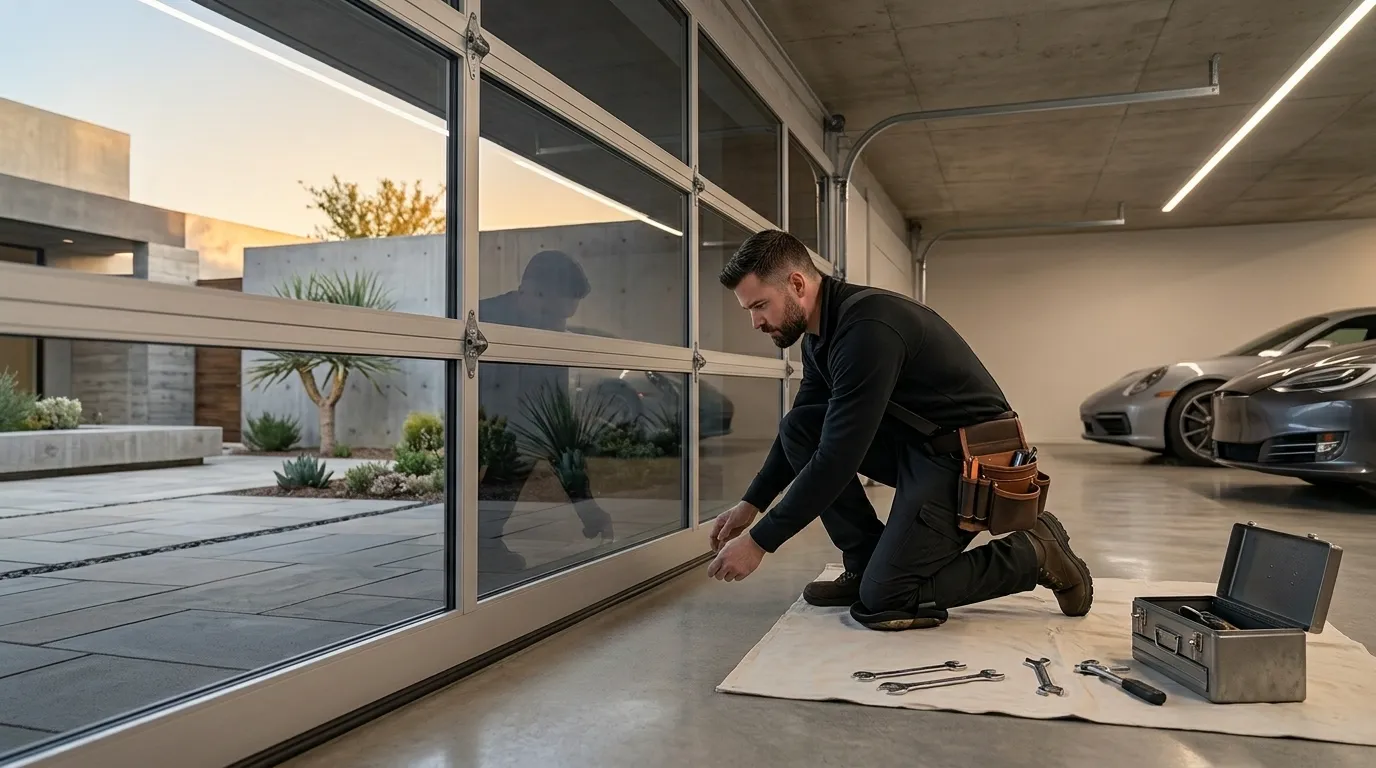
We don't keep a truck parked in Cupertino. We run out of San Jose, about 13 miles away, so when you call we're giving you a real answer based on that drive, not a promise that we're already around the corner. That's the honest version of it: the job gets scheduled, the truck comes from San Jose, and the distance is part of the math.
What that means for you: if a spring lets go on a Tuesday morning, we're not going to pretend there's a local depot we're rolling out of. We're planning the drive same as any other call in this part of the service area. Where it helps is that Cupertino sits close to several other stops we already make regularly - Saratoga, Los Altos, the Cupertino side of Los Altos Hills - so a call here often lines up with a run we're already making that day rather than a special trip on its own.
The typical house in this part of Cupertino went up around 1973. That's a specific window, and it matters because garage door hardware changed fast through the 1970s. Homes from right around that year are the ones most likely to still have an original extension-spring setup mounted along the horizontal track, rather than the torsion spring over the header that became standard as the decade went on. Extension springs from that era don't have the safety cables that later code required, and parts for the original openers, if they're still in place, are long out of production.
We're not going to tell you every door from 1973 needs replacing - plenty of them have been reworked over the years with newer torsion hardware and a modern opener bolted on. But if your panel, track, and springs all look original, that's the tell. The honest limitation here: if what's failing is a proprietary opener drive from that period, we may not be able to source an exact replacement part, and the straighter path is swapping the opener rather than chasing obsolete pieces.
Cupertino counts about 21,137 households, a small slice of the roughly 173,742 across the full service area we cover out of San Jose. Median household income here runs $231,139, noticeably above the $214,149 median for the wider area - which shows up in the kind of door work we get called for. More owners here are asking about insulated steel or wood-composite panels and quieter belt-drive openers rather than the base steel section and chain-drive combination that's more common elsewhere in the coverage area.
The climate doesn't force any special hardware - this whole region sits in a mild temperate band, so we're not dealing with the freeze-thaw cycling that cracks panels or seizes rollers in colder climates. What ages a door here is mostly just time: forty-plus years of daily cycles on the same torsion spring, tracks that have gone slightly out of alignment, weatherstripping that's hardened and cracked. None of that is dramatic. It's just what happens to hardware that's been doing its job quietly since the early '70s.
The run from San Jose to Cupertino is about 13 miles, and it's one we make often - Cupertino sits in the middle of a cluster of stops we cover regularly, with Saratoga about 12 miles out and Los Altos around 16. That's useful in practice: a spring repair booked for Cupertino frequently shares a route with a call in one of those nearby areas, which keeps scheduling realistic instead of guesswork.
We don't route through areas outside our regular coverage to get here, and we're not going to claim a shortcut that doesn't exist. It's a straightforward drive down from San Jose, same as for the other communities on the west side of our service area. If you're near the edge of Cupertino and closer to Saratoga or the Los Altos Hills side, mention that when you call - it can affect which part of the day works best for scheduling.
No. We operate out of San Jose and travel to Cupertino for every job, about 13 miles each way. We're upfront about that distance rather than implying a local depot that doesn't exist.
Possibly. Homes from around 1973 often started with extension springs and openers without today's safety features. If your panel and track look original, it's worth having the spring type and opener checked, since parts for that generation are often discontinued.
Not particularly. This area sits in a mild temperate climate band, so we don't see the freeze-thaw damage that cracks panels or seizes hardware in colder regions. Wear here comes mostly from age and daily use rather than weather extremes.
Sometimes, but not always. Panel styles from that era are frequently discontinued, so matching depends on what's still available. In many cases replacing the full door ends up being more practical than hunting for one matching section.
Call now or request a free quote - same-day service on most repairs, upfront written pricing.
Los Altos sits about 16 miles out from our San Jose base, further than the closer-in calls we run in places like East Foothills or Evergreen, which are barely a couple of miles off. That distance doesn't change what tools go on the truck, but it does mean the call gets scheduled with the drive built in rather than squeezed in between two five-minute jobs across town. On a torsion spring replacement or a full opener swap, that's not a problem - those jobs run 45 minutes to a couple hours regardless of where the truck started. Where the drive matters is diagnostics: if a door needs a second look after the first fix, that's another 16 miles, so we try to nail the cause the first time rather than guess and come back. Most of what we see here is hardware doing exactly what 50-plus-year-old hardware does - springs at the end of their cycle count, rollers worn oval, center bearings dry. The fix itself is standard trade work. What's local is the housing stock behind it, and that's worth understanding before anyone quotes a job over the phone.
Homes in this part of the service area went up mostly through the 1960s and 70s, and Los Altos itself centers closer to 1964 than the 1972 median you'd find averaged across the wider territory. That earlier build year matters for one reason: torsion spring sizing and drum types from that era don't always match what's sold off the shelf today. We carry standard torsion springs, extension springs, steel rollers in nylon and metal, cables, and openers across the common chain, belt, and screw-drive types, along with the sensors and circuit boards that fail on units from the last 10 to 15 years. What we don't stock is obsolete one-piece door hardware from the earliest houses in this age band - if a door still runs its original track and drum from the 1960s, that part may need to be special-ordered, and we'll tell you that up front rather than promise a same-visit fix that isn't realistic.
The mild temperate climate here is genuinely easy on garage doors - no snow load, no deep freeze-thaw cycling to crack panels or seize hinges, so a lot of failures come down to age and cycle count rather than weather stress. Where it goes sideways is usually a homeowner tightening a bolt on a door with a broken spring still under tension, or replacing a roller without checking whether the track it rides in has bowed out of square. On a house built in the 1960s, a track that's been re-hung once or twice already may not be plumb anymore, and a new roller in a bent track just wears out again in months. The other place this goes wrong is opener force settings on older units retrofitted with newer openers - mismatched pulley ratios or drum sizes mean the opener fights the spring instead of working with it, and that shows up as a door that reverses for no obvious reason.
Swapping a roller or lubricating hinges is fair game if you're reasonably handy - that's low-risk work. A torsion spring is not. The spring on a double door is wound under enough tension to break a wrist or worse if the winding bars slip, and that risk doesn't scale down just because the house is smaller or the door is older. If you're set on doing your own diagnostics, check for the easy stuff first: loose bolts on the track brackets, a bent bottom bracket, a sensor with a dirty lens. Beyond that, especially anything involving the spring, the cable drums, or the torsion bar itself, it's not worth the trip to the ER to save a service call. We'll say plainly: some of this is genuinely DIY-safe, and some of it isn't, and the line is the spring.
On houses from this era, the failure pattern is fairly consistent. A door that's suddenly heavy to lift by hand, or an opener straining and groaning before it moves the door at all, points to a spring that's lost tension or snapped outright. A door that shudders, jumps, or drifts off-track partway through its travel usually means a roller has worn through its bearing or a cable has started to fray at the drum. Openers on units installed 10 to 15 years ago are starting to hit the end of their circuit board life, and that shows up as intermittent response to the remote or a door that reverses without an obstruction in its path. With income levels here running noticeably higher than the broader service area average, we also see more requests for full replacement rather than patch repair once a door starts stacking up multiple issues at once - that's a homeowner call, not one we push either direction.
No. We run out of San Jose, about 16 miles away, and Los Altos calls are scheduled with that drive factored in. There's no separate local office or truck stationed here.
Houses here mostly date to the 1960s, and torsion spring sizing from that era doesn't always match today's off-the-shelf stock. We carry the common sizes, but an original drum or track from a 1960s install can occasionally need a special order rather than a same-visit swap.
Not especially. The climate here is mild temperate, without heavy snow load or sharp freeze-thaw cycling, so most failures we see are age and cycle-count related rather than weather damage.
Depends on the unit. Openers installed 10 to 15 years ago are hitting typical circuit board end-of-life, and if a door is stacking up several separate issues at once, replacement often makes more sense than repeated patch repairs. We'll give you both options rather than default to one.