San Jose, CA · Garage Door Service
East Foothills homes date to 1957 and older, many with single-layer wood doors on narrow openings. We install replacements sized to fit, from our San Jose shop 6 miles out.
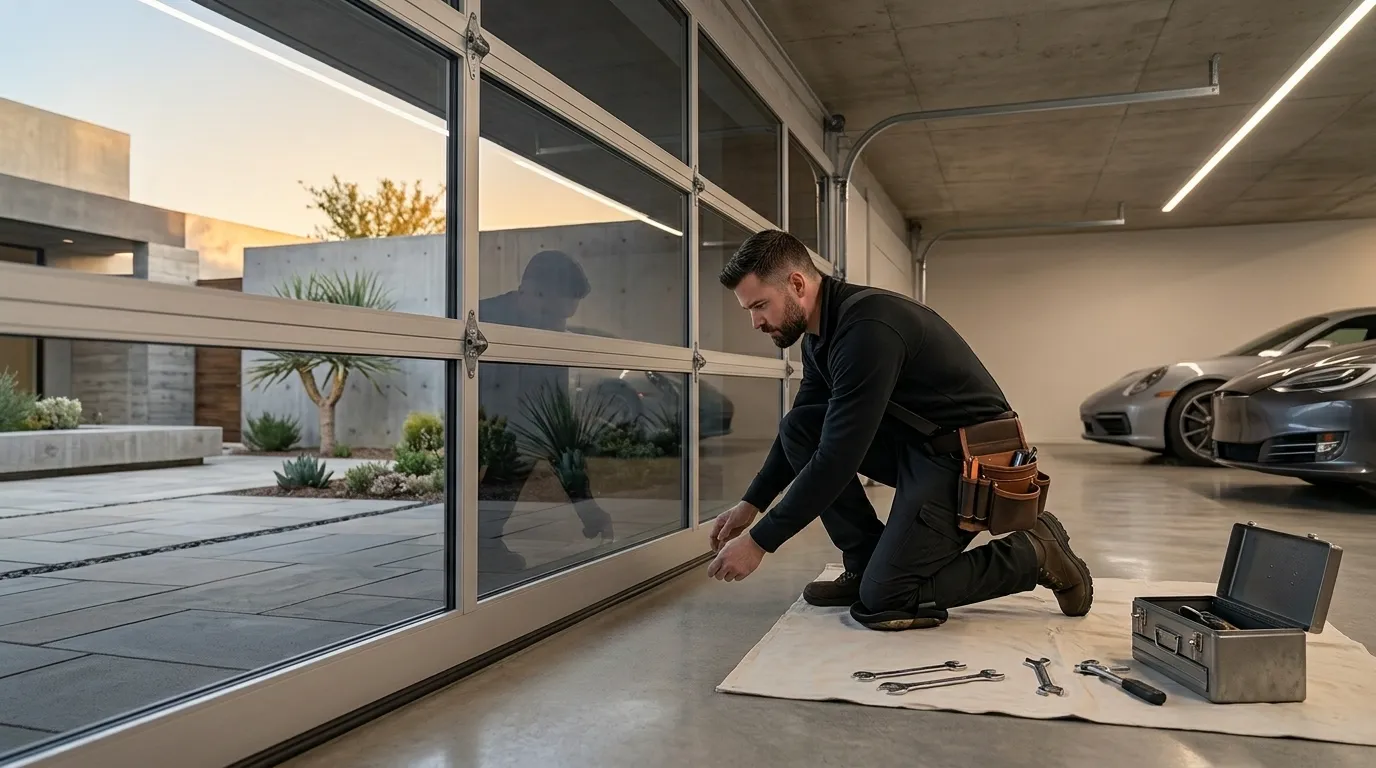
We don't keep a truck parked in Cupertino. We run out of San Jose, about 13 miles away, so when you call we're giving you a real answer based on that drive, not a promise that we're already around the corner. That's the honest version of it: the job gets scheduled, the truck comes from San Jose, and the distance is part of the math.
What that means for you: if a spring lets go on a Tuesday morning, we're not going to pretend there's a local depot we're rolling out of. We're planning the drive same as any other call in this part of the service area. Where it helps is that Cupertino sits close to several other stops we already make regularly - Saratoga, Los Altos, the Cupertino side of Los Altos Hills - so a call here often lines up with a run we're already making that day rather than a special trip on its own.
The typical house in this part of Cupertino went up around 1973. That's a specific window, and it matters because garage door hardware changed fast through the 1970s. Homes from right around that year are the ones most likely to still have an original extension-spring setup mounted along the horizontal track, rather than the torsion spring over the header that became standard as the decade went on. Extension springs from that era don't have the safety cables that later code required, and parts for the original openers, if they're still in place, are long out of production.
We're not going to tell you every door from 1973 needs replacing - plenty of them have been reworked over the years with newer torsion hardware and a modern opener bolted on. But if your panel, track, and springs all look original, that's the tell. The honest limitation here: if what's failing is a proprietary opener drive from that period, we may not be able to source an exact replacement part, and the straighter path is swapping the opener rather than chasing obsolete pieces.
Cupertino counts about 21,137 households, a small slice of the roughly 173,742 across the full service area we cover out of San Jose. Median household income here runs $231,139, noticeably above the $214,149 median for the wider area - which shows up in the kind of door work we get called for. More owners here are asking about insulated steel or wood-composite panels and quieter belt-drive openers rather than the base steel section and chain-drive combination that's more common elsewhere in the coverage area.
The climate doesn't force any special hardware - this whole region sits in a mild temperate band, so we're not dealing with the freeze-thaw cycling that cracks panels or seizes rollers in colder climates. What ages a door here is mostly just time: forty-plus years of daily cycles on the same torsion spring, tracks that have gone slightly out of alignment, weatherstripping that's hardened and cracked. None of that is dramatic. It's just what happens to hardware that's been doing its job quietly since the early '70s.
The run from San Jose to Cupertino is about 13 miles, and it's one we make often - Cupertino sits in the middle of a cluster of stops we cover regularly, with Saratoga about 12 miles out and Los Altos around 16. That's useful in practice: a spring repair booked for Cupertino frequently shares a route with a call in one of those nearby areas, which keeps scheduling realistic instead of guesswork.
We don't route through areas outside our regular coverage to get here, and we're not going to claim a shortcut that doesn't exist. It's a straightforward drive down from San Jose, same as for the other communities on the west side of our service area. If you're near the edge of Cupertino and closer to Saratoga or the Los Altos Hills side, mention that when you call - it can affect which part of the day works best for scheduling.
No. We operate out of San Jose and travel to Cupertino for every job, about 13 miles each way. We're upfront about that distance rather than implying a local depot that doesn't exist.
Possibly. Homes from around 1973 often started with extension springs and openers without today's safety features. If your panel and track look original, it's worth having the spring type and opener checked, since parts for that generation are often discontinued.
Not particularly. This area sits in a mild temperate climate band, so we don't see the freeze-thaw damage that cracks panels or seizes hardware in colder regions. Wear here comes mostly from age and daily use rather than weather extremes.
Sometimes, but not always. Panel styles from that era are frequently discontinued, so matching depends on what's still available. In many cases replacing the full door ends up being more practical than hunting for one matching section.
Call now or request a free quote - same-day service on most repairs, upfront written pricing.
We're based in San Jose, about 6 miles from East Foothills, and we come out to measure before we quote anything. That matters more here than in newer subdivisions, because a lot of these houses were built starting in 1957, well before the 1972 median for the wider area, and door openings from that period aren't always the sizes a big-box store stocks off the shelf. Some are narrower single-car openings, some have headroom that won't take a standard torsion setup without an adjustment. We'd rather see the opening in person than guess from a photo you text us. There's no local branch to drop into - we run the visit off our San Jose schedule, so we ask for a rough window rather than a same-day promise we can't back up. Bring us the make and age of the house if you know it; that alone tells us a lot about what's likely behind the trim before we even open the door.
On a house from the late 1950s, the door itself is usually the easy part to replace. The wall it's bolted to is where the surprises live. Framing from that era wasn't built with today's insulated steel doors in mind - the panels are heavier than the old one-piece wood or light aluminum slab they're replacing, and the jamb sometimes needs reinforcing to carry a modern torsion spring safely. We also see openings that were never quite square to begin with, which a new door will expose in a way the old warped one never did. None of this is expensive fear-mongering - it's just what happens when you put current hardware on a 1957-era opening. The mild climate here means we're not fighting rust or warped wood from moisture the way installers in wetter regions do, which is one thing working in this area's favor.
A full installation means pulling the old door, track, and springs, checking the jamb and header for rot or movement, and setting new track plumb before the door goes in. On these older East Foothills openings we often add or swap out the header bracket, since original framing wasn't sized for heavier insulated panels. We size the spring to the actual door weight rather than reusing whatever wind count the old one had - guessing on spring size is how you get a door that slams down or won't stay open. If the opener is also getting replaced, we run new wiring to code rather than splicing into old runs, since houses from this era weren't wired with a garage door opener circuit in mind. We don't do cosmetic patchwork on siding or stucco around the opening - that's outside what this job covers, and we'll say so upfront rather than quote for work we're not doing.
A straightforward single-door swap usually runs half a day once we're on site. Where the framing needs reinforcing - which happens more often here than in the newer parts of the service area, given how many East Foothills houses predate 1972 - plan on it running longer, sometimes into a second visit if lumber or a specific bracket has to be ordered. Two-car doors take longer than single-car openings simply because there's more track and more spring to set. We won't rush the header work to hit a shorter number; a header that's not solid is the thing that comes back to bite you a year later. Weather rarely slows us down out here given the mild climate, so once we're scheduled, the job itself is the main variable, not the conditions we're working in.
Sometimes, but not always. A lot of East Foothills homes from that era have openings sized differently than what current standard doors expect, and the header often needs reinforcing to carry a modern insulated door and torsion spring safely. We check this on the in-person visit before quoting.
No, we run out of San Jose, about 6 miles away, and travel out for the visit and the install. There's no local branch or drop-in counter here - everything is scheduled off our San Jose shop.
It helps. Without heavy freeze-thaw cycles or constant damp, you're not fighting the rust and warped wood problems installers see in wetter or colder regions. It doesn't eliminate normal wear on rollers and springs, but it does mean the door and track hold up longer between issues.
Often, yes, if the opener is in good shape and compatible with the new door's weight. We'll check the opener's lift capacity against the new door before we hook it back up rather than assume it'll carry the load.